
Post-printing solutions add protection and visual enhancements to digital prints.
BEST PRACTICES
By Amber E. Watson

Today’s digital print technology is capable of producing stunning output. However, the availability of post-press enh
ancements, including coating and special effects, help raise the value of a printed piece. From glitter to UV and abrasion protection, many finishing possibilities provide visual impact or functionality to digitally printed output.
The volume of post-print enhancement increases with the popularity of digital print. Print providers are challenged with producing pieces that endure the elements and stand apart from the competition.
The actual percentage of finished prints is debatable. While some vendors report customers coating 100 percent of digital prints, others estimate that the percentage of prints receiving post-print enhancement is closer to 50 percent or less.
“The number of print jobs glossed or UV coated is still relatively small, however, this number continues to grow as the need or want for protection or enhancement becomes more important,” states Chris Harrington, director of sales, Graphic Whizard.
Inline Advantages
Inline coating adds a protective covering within the press. “This can be spot or full coverage and requires an extra station or head to apply the clear coat,” explains Nate Goodman, product application specialist, Drytac Corporation.
Inline coating stations are available on both sheet-fed or web presses as roller coaters or chamber/anilox coating systems. “Users are able to apply metallic, pearlescent, soft touch, and various other coatings with particulates by chamber/anilox systems,” shares Scott Michels, VP of sales and marketing, Harris & Bruno International. He notes that more common roller coater offline systems are known to struggle in this area.
Inline coating is beneficial because it eliminates the need to handle media twice, increasing throughput.
Mike Barisonek, VP sales and marketing, Epic Products International, agrees that the greatest advantages of inline production include reduced handling, as well as seamless communication and integration between the coater and the press, and preservation of variable data—all of which are important factors in a production print environment.
Most manufacturers work internally or with various suppliers to come up with inline coating solutions. “A coating module is typically put inline before or after the print stations depending on whether one applies primer or coating. These systems are usually controlled through the press operator interface,” says Michels.
Graphic Whizard utilizes its own independent portable transport conveyer, which adds versatility compared to a permanent inline conveyor. “It is our experience that most print providers need to be as versatile as possible. Not all jobs that require UV coating come from the same source,” shares Harrington.
Epic Products, a Xerox and Hewlett-Packard (HP) business partner, offers inline coating solutions for digital presses. Its CTi-635 inline coater incorporates anilox technology and supports both UV and aqueous applications. In addition, it applies specialty coatings. The CTi-635 u
ses a flexographic plate to achieve spot, knock out, or security applications.
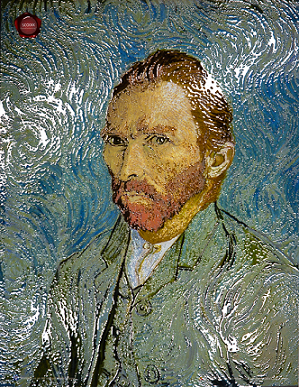
The HP Indigo 7600 Digital Press produces textured effects. This feature impresses embossed-style patterns into the substrate from a mold created on the press using layers of HP ElectroInk. “Such effects help boost creativity and add value to applications such as invitations, business cards, greeting cards, and book covers,” says David Murphy, director of market development, Americas, HP Graphics Solutions Business.Another on-press enhancement of the HP Indigo 7600 is raised print.Scodix’s PolySENSE solution offers a raised, clear polymer that is applied through a printing process performed by inkjet printhead prior to finishing.
 The Kodak NexPress platform offers many inline solutions for coating and surface treatments, such as protective coating with clear dry ink.Kodak NexPress dimensional dry ink is capable of adding a three-dimensional (3D) relief printed texture inline—in one pass. Textured finishes may also be applied with dimensional clear ink so that one can feel the grain of the wood.
The Kodak NexPress platform also offers inline options for enhancements such as the new gold dry ink and pearlescent dry ink announced at drupa.TEC Lighting TruCoat UV coatings are integrated inline with the NexPress platform or as a near line solution.
Graphic Whizard’s line of UV coaters can be placed inline or offline. “The main benefit of placing a coater inline is increased production, which is most beneficial with a single source output, or at least the majority of one’s work,” states Harrington.Graphic Whizard’s line of UV coaters can be placed inline or offline. “The main benefit of placing a coater inline is increased production, which is most beneficial with a single source output, or at least the majority of one’s work,” states Harrington.
Offline Handles Multiple Sources
Offline finishing is accomplished with UV, varnish, or aqueous coatings along with film laminates. There are both advantages and disadvantages associated with each.
“The pros of film technology include added rigidity to cast film; limited clean up; and the use of polyester, which is less expensive than PVC, and polypropylene, which is more eco-friendly. Cons of film are that it comes at a higher cost and requires trimming, which equals more waste and is not as eco-friendly,” says Goodman. “On the flip side, the pros of liquid technology include added conformability, low cost of entry, speed, and the possibility to do small batch customization. The cons of liquid are that UV-curable can be expensive and cleanup considerations are a drawback,” he adds.
Various offline coaters are available, including basic, low-cost machines that offer attractive price-points, but may not be the best option for a production environment. “You usually get what you pay for,” cautions Michels.
Harris & Bruno’s ExcelCoat offline coater offers strong automation featuring chamber/anilox technology that is able to apply matte, soft touch, and other coatings.
Duplo USA distributes the offline coating solution, the Ultra 200A UV Coater, which applies a gloss or satin finish to a range of offset and digitally printed applications. “This finish enhances the richness of colors while protecting the print from scratches and scuffing. It also offers capabilities for coating both sides of the sheet with no additional adjustments required. The applicator and impression rollers engage only at the start and end of the sheet, ensuring a smear-free, clean finish on both sides,” explains Peng Chou, product manager, on demand finishing division, Duplo USA.
Epic Products offers the CT-660 and CT-660XD offline coating systems. The CTi-660 incorporates anilox technology and supports both UV and aqueous applications. In addition, it applies specialty coatings, including digital primers, SoftTouch, metallic, pearlescent, matte, satin, or gloss. The CT-660 uses a flexographic plate to achieve spot, knock out, or security applications. The CT-660XD features UV, air, and infrared drying to apply blister and SoftTouch coatings.
Additional offline post-printing enhancements for the HP Indigo 7600 are served by Scodix Ltd.—an HP solutions partner. Scodix offers inkjet-based Scodix SENSE on the Scodix S Series and Scodix Digital Glittering on its Rainbow Station.
Added Value for an Added Price
Added cost per piece varies based on the enhancement option selected. “In general, laminate coatings tend to be more expensive and time-consuming over toner or liquid solutions,” shares Kathleen Cervi, worldwide category business manager NexPress, Eastman Kodak Company.
“The added price ranges from under one cent to as much as 11 cents a square foot, depending on whether a specialty coating is used. Film laminates typically cost more,” says Goodman.
Most vendors agree the average cost of UV coating is approximately a half-cent per square foot, or an 8×10-inch sheet. “This brings the cost of materials in the area of 0.09 cents for a 12×18-inch sheet per side,” says Harrington.
“Aqueous is generally one-fourth the price of UV,” adds Barisonek.
New on the Horizon
There are many ways to enhance and distinguish a printed piece. In addition to coating, several other post-printing enhancements are available, such as glitter effects, surface texture, specialty finishes, and even security features.
The Kodak NexPress press, for instance, produces security options inline with red fluorescing dry ink. “Red fluorescing is clear when printed on images or graphics and virtually invisible, but when illuminated with a UV light source it shows up red and is ideal for eliminating duplication and fraud potential,” shares Cervi.
The Scodix Rainbow Station is an offline add-on solution to the Scodix S presses, which adds a metallic glitter to a clear UV polymer. Glitter printing may be applied over any color or transparency in a single pass to provide limitless short-run applications such as wedding invitations, cosmetics boxes, and other packaging. The company also provides an inkjet Braille system for standard raised Braille and scientific elements and shapes.
Specialty coatings in Drytac’s InstaCure coating line include dry erase, flame retardant, and anti-slip. PSPs may also use film laminates with images such as Protac Hearts or Protac 3D effect.
“Commercially, a variety of coatings offer unique smells, such as fruits and flowers. High-grip and various textured rollers are also available for a unique finish,” shares Alex Esnaola, director of sales, Graphic Whizard.
As technology evolves, so does creative post-printing enhancements. “We strongly believe the printing industry must focus on print enhancements and not only on faster, bigger CMYK presses,” says Ziki Kuly, VP marketing, Scodix. “Competition is coming from the electronic world and printers must be able to create noticeable pieces that interact with the consumer’s senses, and this is achieved with more print enhancement solutions.”
Nov2012, DPS Magazine
Enhanced Vision
Whether applied inline or offline, coatings and other post-print enhancements benefit a printed piece’s physical appearance, protect it, and offer special effects for various uses. A range of solutions and add-ons help bring digitally printed products to the next level. dps
Article link – https://dpsmagazine.com/content/ContentCT.asp?P=1319
Best Practices Magazine link – https://rcppubs.com/3D/DPS/2012/nov-dec-12/index.html
